FCC Intensifies Oversight of Test Laboratories: Time to Reassess U.S. Market Access Strategies

Background: A New Era of Scrutiny
In June 2026, FCC Chairman Brendan Carr announced a significant enforcement action against a test laboratory that submitted false test results . This move underscores the Federal Communications Commission’s unwavering commitment to protecting the integrity of its equipment authorization program. While this enforcement targeted a specific lab, it is crucial to view it within the broader context of the FCC’s ongoing “Bad Labs” initiative and its concerted efforts to strengthen trust across the entire equipment authorization ecosystem.
Key Developments: Shifting Sands of Compliance
Over the past year, the FCC has taken several decisive actions to reinforce the credibility and trustworthiness of testing and certification activities. These include:
- Revocation or Denial of Recognition: Several laboratories associated with foreign adversary governments have had their recognition revoked or denied .
- “Bad Labs” Program: Implementation of a program specifically designed to identify and address fraudulent or untrustworthy testing facilities.
- Promotion of Trusted Test Labs: Encouraging the use of laboratories that meet higher standards of independence and reliability.
- Proposed MRA Limitations: Proposing to limit the participation of laboratories located in countries without Mutual Recognition Agreements (MRAs) with the U.S. .
The FCC has consistently emphasized that equipment authorization extends beyond mere technical compliance; it now critically encompasses the credibility, independence, and trustworthiness of the entire testing and certification process.
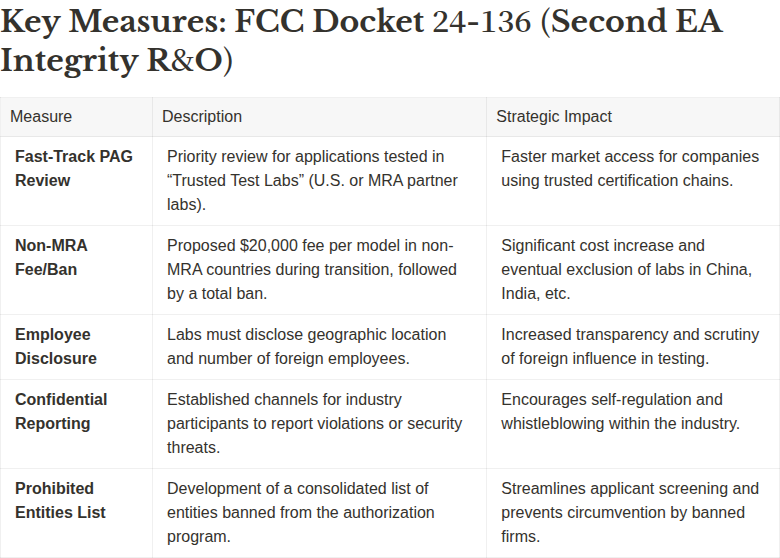
Key Measures: FCC Docket 24-136 (Second EA Integrity R&O)
Industry Impact: Beyond Cost and Speed
For manufacturers aiming to access the U.S. market, the criteria for selecting a laboratory are evolving. The traditional considerations of cost, turnaround time, and technical capability are no longer sufficient. Additional critical factors now include:
- Long-term Recognition Status: The sustained validity and reputation of testing laboratories.
- Regulatory and Geopolitical Risks: Navigating the complexities of international relations and their impact on compliance.
- Supply Chain Resilience: Ensuring the stability and trustworthiness of the entire certification supply chain.
- Market Access Sustainability: Developing strategies for enduring market presence amidst changing regulatory landscapes.
Industries likely to face heightened regulatory attention include:
- AI Servers
- Networking Equipment
- IoT Devices
- Security Products
- Telecommunications Equipment
The Evolving Perspective: Trustworthiness as a Core Requirement
Recent FCC actions clearly indicate that U.S. regulatory expectations are moving beyond traditional product compliance. The focus is increasingly shifting towards broader concepts of supply chain trustworthiness and cybersecurity governance. This means that while product testing results remain important, the integrity of the testing laboratories, the certification processes, and the overall supply chain ecosystem are now under intense scrutiny.
FCC “Trusted Chain” Certification Path

Conclusion: Reassessing Your Certification Strategy
The FCC’s intensified oversight sends a clear message: equipment authorization is no longer solely about product testing results. A significant emphasis is now placed on the trustworthiness of testing laboratories, certification processes, and the broader supply chain ecosystem. For companies exporting to the United States, this is a critical juncture to reassess certification strategies and strengthen partnerships with trusted testing and certification providers. Proactive evaluation of laboratory recognition status, certification supply chain stability, and future regulatory risks will be paramount for sustainable market access.
Not Sure Where to Start?
Request a free initial consultation or product assessment.
Our experts are here to help.
References
[2] FCC Bans ‘Bad Labs’ from U.S. Equipment Authorization Process (FCC News Release):